
There is no single best serum for menopausal skin. The best one is the one made for what your skin needs right now. Start with the change that bothers you most, choose one serum for it, and use it every day for at least six weeks before judging.
Choose by what your skin needs now
| If your skin feels… | Look for | Kinis serum |
|---|---|---|
| Dry, tight, thirsty | Hyaluronic acid, sodium PCA | Nourish |
| Less firm, with more fine lines | Peptides | Poise |
| Rougher, less even, lines settling | Bakuchiol, a gentle retinol alternative | Restore |
| Dull and tired | Vitamin C | Radiance |
| Uneven, with more visible pores | Niacinamide | New Chapter |
| Sensitive, easily upset | Prebiotics | Harmony |
Why one serum, not five
Midlife skin is often more reactive than it used to be. Piling on actives can leave it irritated, and makes it hard to tell what is working. One targeted serum, used consistently, usually does more than a crowded shelf.
If you want to tackle two things, use one in the morning and one in the evening. Vitamin C suits mornings, alongside SPF. Bakuchiol and peptides suit evenings.
How to use a serum with your moisturiser
Every Kinis serum can be smoothed on before your moisturiser, or mixed straight into it. Mixing is simplest: a few drops into your usual amount of cream, and your moisturiser now does the targeted work too. Read more in Make your moisturiser your own.
Want firmness, hydration and renewal together?
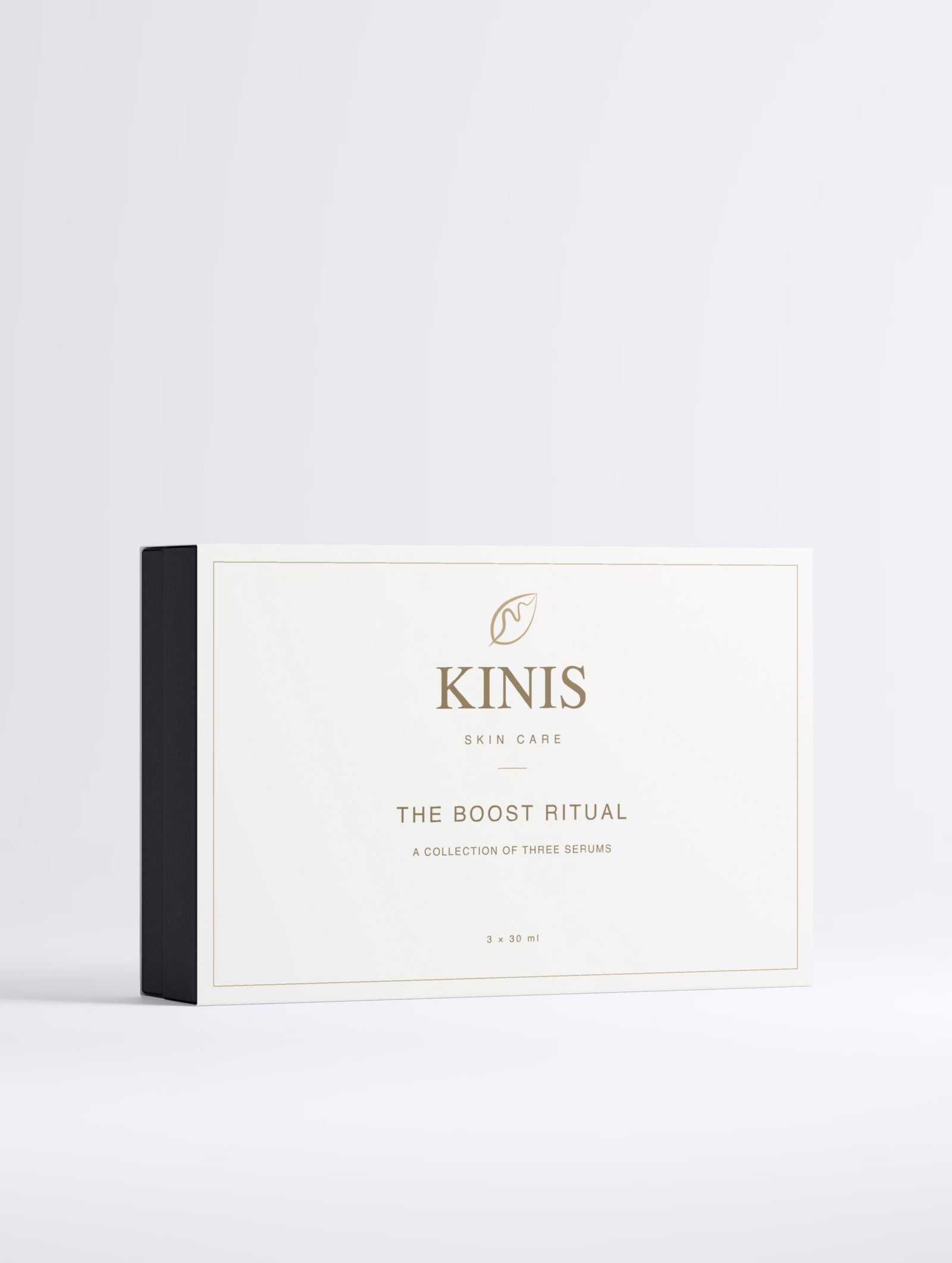
The Boost Collection brings Nourish, Poise and Restore together in one gift box: hydration, firmness and a gentle retinol alternative.
A note on HRT
Our serums are cosmetics and contain no hormones, so many women use them alongside HRT. If you have questions about your treatment, speak to your GP or pharmacist.
Still deciding? Find your routine in three questions.