
If your skin suddenly feels tight after washing, your foundation catches on dry patches, or the cream you have used for years no longer seems enough, you are not imagining it. Dry skin is one of the most common changes women notice through perimenopause and menopause.
Why skin gets drier
Oestrogen helps skin hold on to water. It supports the oils and natural moisturising factors that keep the surface soft, and the barrier that stops moisture escaping. As oestrogen falls, skin can make less of these, so it loses water more easily. The result is skin that feels tight, looks duller and can flake or itch.
It often happens gradually, and it can show up alongside other changes, like fine lines looking more noticeable or skin feeling more sensitive than before.
A simple routine for dry, menopausal skin
You do not need a ten-step routine. A few well-chosen steps, used every day, make the biggest difference.
- Cleanse gently. Harsh, foaming cleansers can strip what little oil skin has left. Use a gentle cleanser and lukewarm water; if your skin is very dry, a cream or balm cleanser may feel kinder.
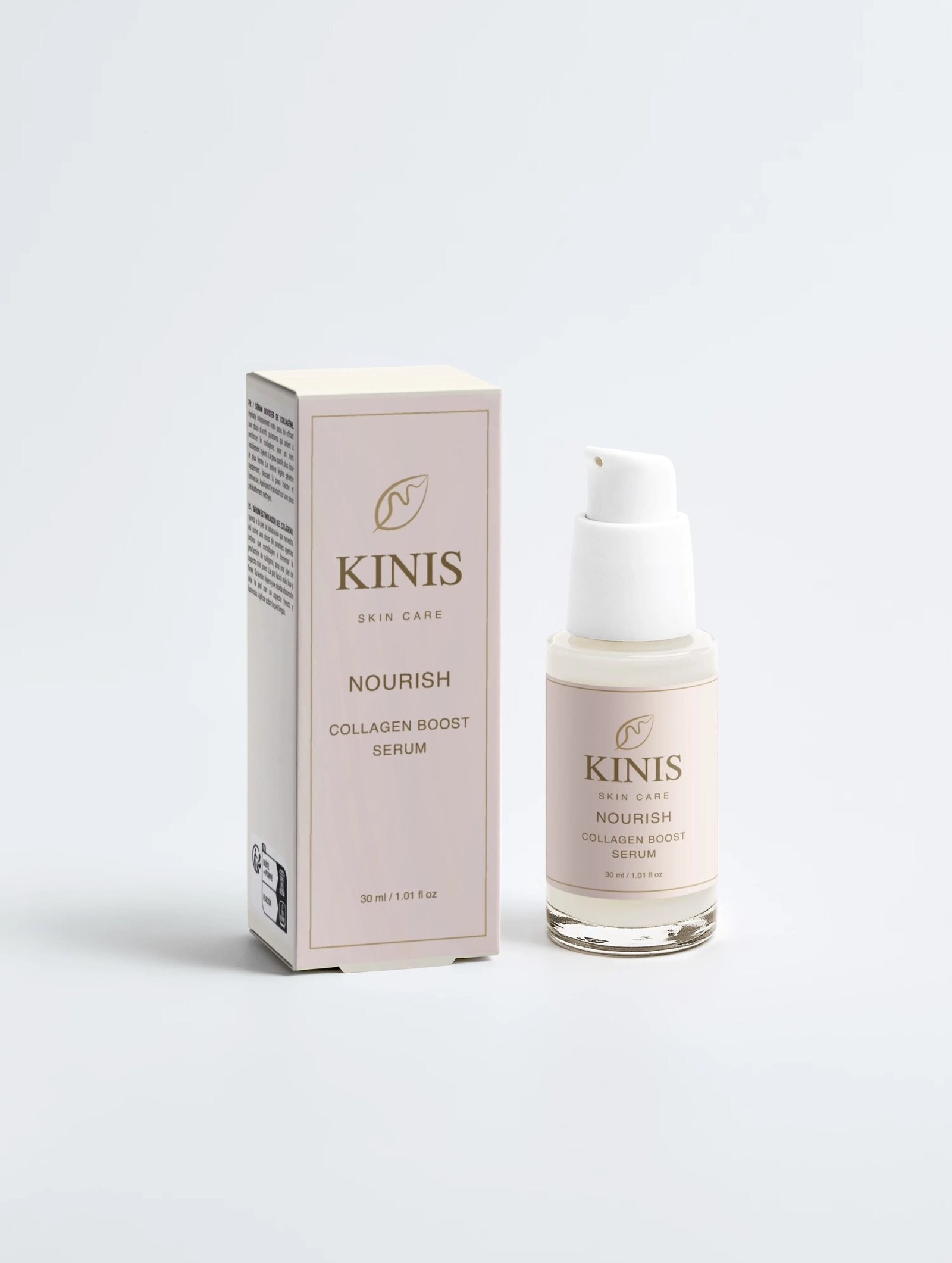
- Add water back. Humectants like hyaluronic acid and sodium PCA draw water into the skin. Nourish layers both in a light serum that absorbs quickly.
- Support the barrier. A calmer, stronger barrier holds on to moisture for longer. Harmony pairs prebiotics with hyaluronic acid to help skin feel more balanced and comfortable.
- Seal it in. Finish with your moisturiser, morning and night. On very dry evenings, a few drops of a facial oil help. Restore combines rosehip oil with bakuchiol, a gentle plant-based alternative to retinol.
- Protect by day. Sun exposure weakens the barrier further, so use a daily SPF, even in winter.
Make your moisturiser work harder
Kinis serums are designed to be mixed into the moisturiser you already like, or smoothed on underneath it. You keep the cream you trust and add what your skin needs now. As your skin changes, change the serum, not your whole routine.
Small habits that help
- Keep showers warm rather than hot, and pat skin dry.
- Apply serum and moisturiser while skin is still slightly damp.
- Run a humidifier if central heating dries the air.
- Drink water through the day; it will not fix dry skin alone, but it helps.
When to speak to your GP
If dryness comes with persistent itching, redness, cracking or a rash, speak to your GP or pharmacist. Our products are cosmetics; they care for how skin looks and feels and do not treat medical conditions.
Find your routine: not sure where to start? Take our three-question routine finder.